
Federal Insurance Bill Re-introduced + News Efforts and Materials Abroad
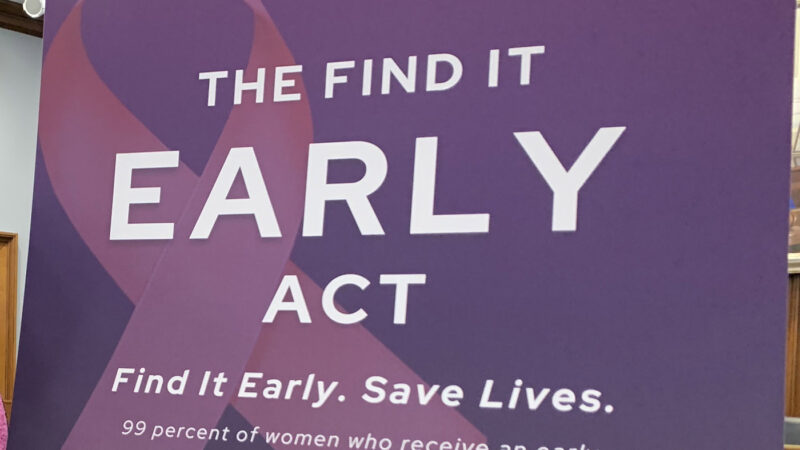
The Find It Early Act
The federal insurance bill, the Find It Early Act, has now been re-introduced in both the House and Senate. DBI has been closely involved in the bill’s development, introduction, and ongoing progress. [Fun fact-the bill’s title was inspired by DBI’s #FindItEarly tagline.] Once the House bill is formally numbered (Senate version is S1410), DBI will again organize a Statement of Support from national medical societies, advocacy groups, and health systems. Stay tuned!
Australia: Breast Density Information for GPs
BreastScreen Australia has introduced Breast Density Measurement, Reporting, and Guidance for Health Professionals to help women understand breast density measurement, reporting and screening considerations and to increase their confidence in the breast screening program. For information about awareness and education efforts in Australia, please visit information forum InforMD.
New Study
In a study using prior negative mammograms from 524 women who developed interval breast cancer in the UK, among a total of 134,217 negative mammograms, Mirai deep learning software could identify women at risk for interval cancer 1-, 2-, or 3-years later.1 Accuracy was not affected by patient age or breast density. Specifically:
- The highest 1%, 5%, 10%, and 20% of three-year risk scores predicted 3.6%, 14.5%, 26.1%, and 42.4% of women who developed interval cancer.
- Of 469 women with interval cancer and breast density information, 285 (60.7%) developed in those with dense breasts, and 37.8% of women had dense breasts.
Use of Mirai software may improve recognition of some women who may benefit from supplemental screening after a negative mammogram distinct from those with dense breasts alone, but only the minority of women who developed interval cancer would have been selected based on the top 20% Mirai risk. Women with extremely dense breasts had similar risk of interval cancer as those in the top 20% Mirai risk. It is unclear how the combination of heterogeneously dense breasts plus other risk factors would have performed, as is used in many breast centers in the United States.