• Skip to primary navigation
  • Skip to main content
DB-I Logo

DenseBreast-info, Inc.

Get Smart About Being Dense

HOME/USA

EUROPE

Español

  • Home
  • For Patients
    • Patients Home
    • Dense Breasts: 5 Facts You Should Know
    • Is My Mammogram Enough?
    • Screening Tests After a Mammogram (Table)
    • Let’s Talk About Dense Breasts, Video Series
    • Patient Questions and Answers
    • Patient Resources by Language
    • Print: Patient Fact Sheet
    • Print: Patient Brochure
  • For Providers
    • Providers Home
    • CME/CE: “Dense Breasts, Risk, and Supplemental Screening”
    • Flow Chart: Who Needs More Screening?
    • Health Care Provider FAQs
    • Risk Model Tutorial
    • Table: Mammography Guideline Comparison
    • Table: Dense Breast Screening Guidelines
    • Table: High/Increased-Risk Screening Guidelines
    • DBI Research
    • Patient Resources
  • Screening Technologies
    • Screening Technologies Home
    • For Patients: Screening Tests After a Mammogram (Table)
    • For Providers: Cancer Detection by Screening Method (Table)
    • 2D/3D Mammography
    • Mammography AI Screening Tools, Comparative Tables
    • Breast Ultrasound (Sonogram)
    • Breast MRI
    • Contrast-Enhanced Mammography (CEM)
    • Molecular Breast Imaging
    • DBI Research
  • Inform/Insurance Laws
    • Inform/Insurance Laws Home
    • Inform: Federal FDA Dense Breast Reporting
    • Insurance
      • State Law Insurance Map and Federal HRSA Guidelines
      • State Law Insurance Table
      • Federal Insurance Bill: Find It Early Act
  • Blog & Press
  • About Us
    • About Us Home
    • Our Mission
    • World Dense Breast Day
    • Our Team
    • DBI Research
    • Let’s Talk About Dense Breasts, Video Series
    • Patient Resources
    • Contact Us
    • Please Donate
  • Our Corporate and Health Group Supporters
/ Blog / Risk Model Tutorial / New Study
Risk Model Tutorial / New Study | Dense Breast Info

Risk Model Tutorial / New Study

October 21, 2024 by Dense Breast Info

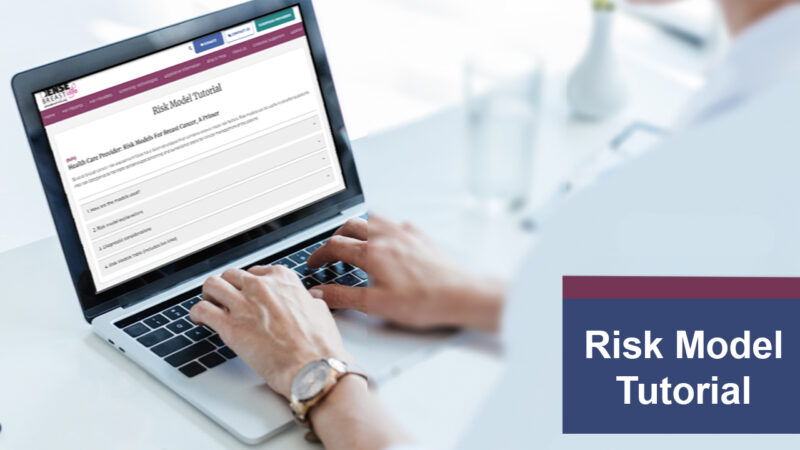
Risk Model Tutorial
A resource reminder! DBI’s Risk Model Tutorial content for health care providers includes:

  • How the models are used
  • Risk model explanations
  • Diagnostic considerations
  • Risk models table (with live links)


New Study
At Rush University affiliated centers in Chicago, a retrospective review of automated breast ultrasound (ABUS) use in women with dense breasts showed the following:

  • Use of ABUS was greater in white women than in other racial or ethnic groups.1
  • Adding ABUS for women with dense breasts (both screening and diagnostic populations) increased early-stage breast cancer detection.2
  • Added false positives were not detailed.

1From September 2017 to December 2022, across 51,086 screening or diagnostic mammogram exams, 24,637 (48%) women had dense breasts and were recommended for ABUS, and 9865/24,637 (40%) had at least one ABUS examination.  Of 10,667 white women, 4943 (46%) had at least one ABUS exam, versus 2604/6843 (38%) Black, 1466/4278 (34%) Hispanic women, and 521/1590 (33%) Asian women.

2Among 9865 women who had at least one ABUS exam, 37 were found to have breast cancer, with 33/37 (89%) of those stage 0 or stage I and all node negative. The added cancer detection for ABUS was estimated at 2.4/1000 ABUS exams (the number of ABUS exams was not given).

DenseBreast‑info, Inc. is an independent, nonprofit organization. DBI is not affiliated with or endorsed by other organizations unless expressly identified. If you have questions about DBI’s programs or partnerships, please contact us.

© Unpublished, DenseBreast-info, Inc. ALL RIGHTS RESERVED | 501(c)(3) Public Charity

  • Online Privacy Policy
  • Online Terms of Use & Disclaimers

This website is for informational purposes only and is not intended to be a substitute for medical advice from a physician or to create a standard of care for health care providers. In addition, information has been provided by independent third parties and may not represent the views of DenseBreast-info.org. Please check with a physician regarding your specific condition, if you have any questions, or need a diagnosis. If you are experiencing an urgent medical condition, call your local emergency services [e.g., 9-1-1 (in the USA) or 1-1-2 (in Europe)].