New State Insurance Bills
Three new state bills were introduced this week for expanded coverage for breast imaging: Alabama SB117, West Virginia SB518 and SB519.
For details on existing state insurance laws, visit the DenseBreast-info.org MAP.

DenseBreast-info, Inc.
Get Smart About Being Dense
Federal Guideline for Insurance Coverage
Effective Jan 1, 2026, Affordable Care Act compliant plans are now required to cover, for women at average risk, “additional” breast imaging in the Health Resources Services Administration (HRSA)-supported Women’s Preventive Services Initiative (WPSI) recommendations. The new guidelines state, “Women may require additional imaging to complete the screening process or to address findings on the initial screening mammography. If additional imaging (e.g., magnetic resonance imaging (MRI), ultrasound, mammography) and pathology evaluation are indicated, these services are also recommended to complete the screening process for malignancies.”
More details:
Our input:
State Insurance Bills
New legislation for insurance coverage of expanded breast imaging:
Arizona SB1165
California AB1570
Florida SB1494
Rhode Island S2032
South Carolina S0820
Insurer Breast Imaging Expansion
Blue Cross Blue Shield affiliated organization Highmark Inc. has announced plan members across 4 states will receive 100% coverage for diagnostic breast studies and MRIs. More HERE.
U.S. State Insurance Bills
New 2026 insurance bill introductions for expanded breast imaging include: Indiana HB1112 and Kentucky HB135
BRAID RSNA Presentations and Automated US Study
Additional BRAID Trial Results
Several sessions at RSNA 2025 showed second round results from the UK BRAID trial led by Dr. Fiona Gilbert. The initial trial enrolled 9361 women age 50-70 from October 2019-March 2024 with dense breasts and a negative mammogram who were randomized to receive supplemental screening with automated breast ultrasound (ABUS), abbreviated MRI (AB-MRI), or contrast-enhanced mammography (CEM), with results published in The Lancet in May 2025. Women with a negative result from the initial supplemental screen who enrolled by 3/31/23 were invited to have a second round of screening 18 months later that included mammography (MG).
1 Cancer detection rates were 15/1572 (9.5/1000) for ABUS+MG; 9/1051 (8.6/1000) for AB-MRI+MG; and 6/870 (7.0/1000) for CEM in the second round. [By comparison, cancer detection rates in the first round were 4.2/1000 for ABUS; 17.4/1000 for AB-MRI; and 19.2/1000 for CEM after a negative mammogram.]
2 Recall rates in the second round were 4.3% for ABUS; 3.5% for AB-MRI; and 4.7% for CEM. In the first round, recall rates were 4.0% for ABUS; 9.7% for AB-MRI; and 9.7% for CEM.
ABUS in Non-dense Breasts
Two referral centers in Korea retrospectively reviewed results of screening women with non-dense breasts and compared performance of digital mammography (DM) alone vs DM + automated breast ultrasound (ABUS). They reviewed 2904 paired screening examinations among 1683 women with non-dense breasts.
New State Insurance Law
A new insurance law in Pennsylvania expands no-cost breast imaging coverage. Please see the Pennsylvania legislative analysis from DenseBreast-info HERE.
New Study
Esserman et al published results from the WISDOM (Women Informed to Screen Depending on Measures of Risk) trial in JAMA. The authors sought to demonstrate that reduced screening based on lower risk was safe. Due to low adherence to recommended screening (with contamination in the annual arm), as indicated in the accompanying editorial, the effectiveness of such an approach remains uncertain. Breast density and other characteristics of women with symptomatic or advanced cancers were not specified. The approach of not screening “low-risk” women in their 40s is particularly problematic for Black, Hispanic, and Asian women who have earlier peak onset of breast cancer and more frequent distant disease at presentation. See also the commentary by the Society of Breast Imaging.
A total of 28,732 women age 40-74 from all 50 states were randomized to risk-based screening or annual mammography.1 Women were followed a median of 5.1 years (up to 10) and cancers, biopsies, and screening were self-reported.
Women in the elevated and high-risk groups were counseled on risk-reducing medications, but use remained very low (5.6% at baseline, increasing to 10.3% with intervention, in the highest-risk group and 3.5% increasing to 4% in the elevated risk group).
1 A total of 14212 women were randomized to risk-based screening based on the BCSC Risk Assessment Tool (which includes breast density) and polygenic risk score genetic testing, with 2% (291) “high risk” (≥6% 5-year risk or carrier of known pathogenic variant) and recommended to have alternating 6-month mammography and MRI; 8% (1121) “elevated risk” (top 2.5% of risk by age or extremely dense breasts, or intermediate genetic risk variant) assigned to annual mammography; 63% (8796) “average risk” assigned biennial mammography beginning at age 50; and 27% (3716) “low risk” (women less than 50 with <1.3% 5-year risk). The other 14160 women were randomized to annual mammography screening.
2 There were 41 stage IIB or higher cancers in the risk-based arm (63.1/100,000 person-years) and 43 (68.2/100,000 person-years) in the annual arm (rate ratio 0.92, 95%CI 0.60 to 1.43).
3 There were 1029 biopsies in the risk-based arm (1371/100,000 person-years) and 943 in the annual arm (1272/100,000 person-years, rate ratio 1.08 (95%CI 0.99 to 1.18).
4 Rate of MRI per 100,000 person-years was 1187 in the risk-based arm and 795 in the annual arm (rate ratio 1.49, 95%CI 1.34 to 1.66).
Announced at SABCS
At the San Antonio Breast Cancer Symposium last week, Astrin Biosciences presented encouraging results from an AI-proteomics-based liquid biopsy to detect breast cancer. Specifically:
Sources of false positives will be important to understand and mitigate.
1 A training set of 379 cancer cases and 466 controls was used, and all cases were treatment naïve. Training used 5-fold cross validation and showed AUC of 0.961.
2 85% (11/13) for stage 0; 88% (61/69) for stage I; 97% (95/98) for stage II; 88% (14/16) for stage III; and 100% (2/2) for stage IV (no significant differences, but relatively small subsets).
3 100% (20/20) for invasive lobular carcinoma; 94.8% (145/153) for invasive ductal carcinoma; 95.9% (116/121) for hormone receptor +/HER2-; 94% (15/16) for triple negative; 67% (4/6) for triple positive; and 100% (3/3) hormone receptor -/HER2+ (small numbers in most subsets).
Since DenseBreast-info.org was launched ten years ago, we’ve hosted over 4.2 million website visits of our medically-sourced educational resource. What began as a website has grown into a thriving community that extends far beyond a single online footprint. In addition to nearly 10,000 newsletter subscribers, we have over 58,000 followers across 8 different social media platforms, and that number grows each day as we develop new content and invest in new channels.
This audience isn’t just growing—they’re becoming more engaged. In the last five years, our social media engagement rate has climbed to double the industry average! This proves that when you build a foundation on medically sourced information, you spark the kind of critical conversations that matter—among patients, advocates, healthcare professionals, and legislators alike.
As we celebrate this 10-year anniversary, we invite you to follow us throughout the rest of the year for our most popular content, resources, and reflections tagged #DBIDecade. We’d also love to hear from you—share what you’ve learned over this past decade and how DenseBreast-info has been part of your journey.
None of this would be possible without the dedication and expertise of our partners, our Medical Advisory Board, our Patient Advisory Board, and supporters. Your questions, your stories, and your commitment to finding breast cancer at the earliest stage possible drives everything we do.
Here’s to ten years of trusted information, and to many more years of supporting you.
Gold Medalist
Congratulations to Dr. Wendie Berg, DBI’s Chief Scientific Advisor, for being named SBI’s 2026 Gold Medalist! The honor is in recognition of her exceptional and significant contributions to the subspecialty of breast imaging, including leading ACRIN 6666, validating and standardizing screening ultrasound and showing the far superior cancer detection from screening MRI in women at elevated risk with dense breasts. Dr. Berg continues to evaluate technologies that improve early cancer detection, focusing now on contrast-enhanced mammography. She has also led a trial demonstrating complementary performance of MRI and dedicated breast positron emission mammography in assessing disease extent. She is a scholar who co-edited three editions of Diagnostic Imaging: Breast and its online component, StatDx. Finally, she is recognized for helping launch and maintain our educational efforts at DenseBreast-Info.org.
UK Parliament Update
DBI’s European Education Coordinator Cheryl Cruwys reports that a recent Parliamentary “Drop-In” event, held to lobby for increased investment in breast screening, was a great success. The event saw strong attendance and engagement from Members of Parliament (MPs), breast cancer experts, patients, and the press. Their collective support underscores the growing recognition of the need to improve breast screening services. Building on this momentum, additional drop-in events will be scheduled for 2026.
The Find It Early Act
The federal insurance bill, the Find It Early Act, has now been re-introduced in both the House and Senate. DBI has been closely involved in the bill’s development, introduction, and ongoing progress. [Fun fact-the bill’s title was inspired by DBI’s #FindItEarly tagline.] Once the House bill is formally numbered (Senate version is S1410), DBI will again organize a Statement of Support from national medical societies, advocacy groups, and health systems. Stay tuned!
Australia: Breast Density Information for GPs
BreastScreen Australia has introduced Breast Density Measurement, Reporting, and Guidance for Health Professionals to help women understand breast density measurement, reporting and screening considerations and to increase their confidence in the breast screening program. For information about awareness and education efforts in Australia, please visit information forum InforMD.
New Study
In a study using prior negative mammograms from 524 women who developed interval breast cancer in the UK, among a total of 134,217 negative mammograms, Mirai deep learning software could identify women at risk for interval cancer 1-, 2-, or 3-years later.1 Accuracy was not affected by patient age or breast density. Specifically:
Use of Mirai software may improve recognition of some women who may benefit from supplemental screening after a negative mammogram distinct from those with dense breasts alone, but only the minority of women who developed interval cancer would have been selected based on the top 20% Mirai risk. Women with extremely dense breasts had similar risk of interval cancer as those in the top 20% Mirai risk. It is unclear how the combination of heterogeneously dense breasts plus other risk factors would have performed, as is used in many breast centers in the United States.
New State Insurance Bill
Michigan has introduced a bill to eliminate out-of-pocket costs for supplementary and diagnostic breast imaging. HB 5205 bill draft available HERE.
UK News: Lobbying Event in Parliament
European Education Coordinator Cheryl Cruwys has organised a lobbying event at the Houses of Parliament on Wednesday 19 November. Also attending is Professor Fiona Gilbert, Department of Radiology, University of Cambridge, and honorary consultant radiologist at Addenbrooke’s Hospital, who led the UK BRAID study. The aim is to highlight the need for change and to obtain Declaration of Support signatures for investment to improve the breast screening programme to benefit women.
New FREE Credit Opportunity
Breast density matters—and understanding its impact is critical for delivering personalized, high-quality care in women’s health. DenseBreast-info has just launched an on-demand CME (AMA)/CE (ASRT) activity, Dense Breasts, Risk, and Supplemental Screening. In this video-based course, our experts Dr. Wendie Berg and Dr. Robin Seitzman provide a comprehensive update on the science, guidelines, and communication strategies every women’s health provider needs to know. Please share this resource with colleagues.
Europe / UK Education
DBI’s European Education Coordinator Cheryl Cruwys lectured University of Salford diagnostic radiography students on dense breasts, including an overview of DBI website healthcare professional resources.
U.S. State Insurance Bills
DBI’s work on individual state insurance bills for expanded breast imaging coverage continues. Executive Director JoAnn Pushkin’s op-ed in the Milwaukee Journal Sentinel details why the proposed Gails’ Law, inspired by Wisconsin patient advocate Gail Zeamer, should advance and why it matters. For details on existing individual state insurance laws for expanded breast imaging, see the DBI MAP.
Europe / UK Education
DBI’s European Education Coordinator Cheryl Cruwys was invited by the University of Suffolk to lecture diagnostic radiography students on dense breasts, including an overview of DBI website healthcare professional resources.
New Study
From over 32 million screening and over 6 million diagnostic mammography records from 2010-2022 in the National Mammography Database, Oleyumi et al. evaluated false negative rates (FNR) at one year and associations with facility and patient factors. FNR was 1.9/1000 and 4.0/1000 for screening and diagnostic mammograms, respectively. Though interval cancers found by supplemental screening were included among false negatives and could not be distinguished from those found due to symptoms and linkage to tumor registries was mostly lacking, there were several interesting observations:
RSNA Write Up on CEM
Contrast-Enhanced Mammography as an Alternative to MRI: a discussion of work from DBI’s Chief Scientific Advisor Dr. Wendie Berg and Dr. Fiona Gilbert (PI of the BRAID trial) on contrast-enhanced mammography screening. Small invasive cancers were found before spreading to lymph nodes, a good alternative to MRI.
DBI in Washington DC
While the U.S. government shut down has delayed this session’s House introduction of the Find It Early Act, DBI’s Executive Director JoAnn Pushkin was invited to join a panel discussion moderated by The Hill (a political newspaper/website that provides non-partisan coverage of Congress). Screening Saves Lives: Closing the Gap in Breast Cancer Care focused on the need for expanded breast imaging insurance coverage with no out-of-pocket costs for women with dense breasts or at higher risk (starts at 57.23 mark). We thank the Alliance for Breast Cancer Policy for sponsoring the event.
New European Education Supporter
Join us in welcoming Dr. Thiemo van Nijnatten as DBI’s European Education Supporter from The Netherlands! T. van Nijnatten is a Breast and Nuclear Radiologist at Maastricht UMC+ and Dutch Expert Center for Screening (LRCB). He is also executive board member of the European Society of Breast Imaging (EUSOBI) and the current chair of the EUSOBI Young Club Committee.
Ready for Patient Conversations?
DBI’s Breast Cancer Awareness Month education outreach include this article in Applied Radiology, FDA Breast Density Reporting is in Effect. Ready for Patient Conversations? by executive director JoAnn Pushkin.
New MBI Study
Annual Molecular Breast Imaging Improves Cancer Detection in Dense Breasts: Hruska et al reported results from the prospective multicenter Density MATTERS (Molecular Breast Imaging and Tomosynthesis to Eliminate the Reservoir) trial in Radiology. Among nearly 3000 women with dense breasts, 87% of whom were not at high risk, adding 99mTc-sestamibi molecular breast imaging (MBI) to tomosynthesis (DBT) each year for two years, with one additional year of follow-up showed:
Specifically:
1 In year 1, the incremental cancer detection rate from adding MBI to tomosynthesis was 6.7/1000 (95%CI 4.2, 10.6), with tomosynthesis alone depicting 5.0/1000. In year 2, the incremental cancer detection rate from adding MBI to tomosynthesis was 3.5/1000 (95%CI 1.7, 6.8), with tomosynthesis alone depicting 5.8/1000.
2 Of 29 women with cancer seen only on MBI, 21 (72%) were invasive (median size 0.9 cm, range 0.4 to 2.6) and 18/21 (86%) were node negative. Six women (20%) had locally advanced breast cancers.
3 False positive recall rate in year 1 was 16.9% after combined DBT+MBI screening, compared to 8.1% for DBT alone (added false positive recall rate due to MBI of 8.8% in year 1), and 12.9% after combined DBT+MBI screening in year 2, compared to 8.4% for DBT alone (added recall rate due to MBI of 4.5% in year 2).
4 Symptomatic interval cancer rate was 2/2978 (0.7%) in year 1 and 2/2590 (0.8%) in year 2.
Oh, What a World Dense Breast Day!
European News / The Netherlands
The Dutch National Institute for Public Health and the Environment has published a feasibility study on a temporary extension of the National Programme for Breast Cancer Screening to include MRI scans for women with density level D, and has also outlined scenarios to accelerate implementation with a timeline.
Screening Decision Tools
We have been asked to provide descriptions/links to our new and updated screening decision tools. We are delighted that so many of you found these a valuable resource:
World Dense Breast Day
A reminder that Wednesday, Sept 24th is World Dense Breast Day! DBI will launch 120 educational posts across 5 social media channels. To engage participants in every global time zone, our “digital day of action” will run from midnight to midnight. For more info, please see our PRESS RELEASE.
EUSOBI 2025, Sept 25-27
The European Society of Breast Imaging Annual Scientific Meeting takes place 25-27 September in Aberdeen. The DenseBreast-info.org/Europe exhibition stand will be located at R8. DBI’s Cheryl Cruwys, European Education Coordinator and Dr. Athina Vourtsis, European Liaison will be in attendance. If you would like to schedule a ‘meet up’, please email us or contact Cheryl at +33 643 88 67.

#WDBD is less than 2 weeks away and work is almost done on the 100+ posts that will launch! See our Press Release for more info.
Medical Advisory Board
Congratulations! DBI MAB member Dr. Priscilla Slanetz is the new Editor-in-Chief of Academic Radiology.
Society of Nuclear Medicine and Molecular Imaging, Use Criteria
Appropriate Use Criteria for Molecular Breast Imaging were published August 26 in the Journal of Nuclear Medicine Technology. The criteria were developed by a workgroup of 10 experts convened by the Society of Nuclear Medicine and Molecular Imaging and included representatives from the American College of Radiology, the American College of Nuclear Medicine, the Society of Breast Imaging, the American Society of Breast Surgeons, the American Society of Clinical Oncology, and the European Association of Nuclear Medicine. An abbreviated SNMMI AUC Fact Sheet is available HERE.
Patient Fact Sheet
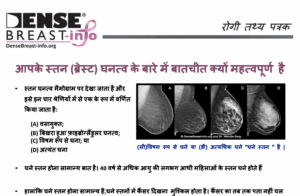
DBI has patient resources in 25+ languages, one of the most popular is our fact sheet, Why a Conversation About Your Breast Density Matters. The fact sheet is now available in Hindi! The fact sheets are useful office and/or event handouts.